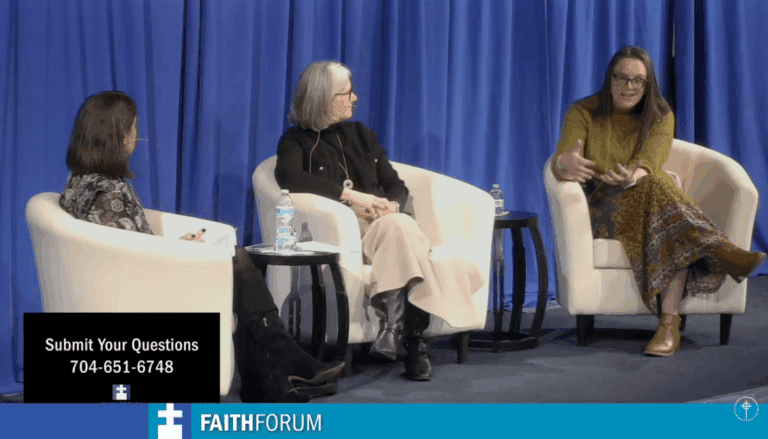
This month is National Social Work Month. We sat down with our Program Director, Marissa Patti-Marshall LCSW, LISW-CP.
How would you describe what social workers at CFH do to support families? Can you walk us through what a social worker’s day-to-day looks like at CFH?
As a CFH social worker, it is our honor and responsibility to empower the families we work with to achieve long term self-sufficiency. We act as mentors, advocates, and educators to ensure we are providing the families with a level of support and trust that they can grow from. We meet the families where they are at, which may mean completing referrals for food and clothing or listening as they share about a past experience or sitting at the table with their children, helping them process their school day. The day-to-day looks different depending on client needs. Most days consist of home visits to ensure clients are progressing with their goals and have all necessary items to be comfortable in their housing. When we mention goals, that could mean repairing credit, obtaining transportation, healing from emotional trauma, or going back to school. The role is exciting because every family has a different path to the mutual end goal of financial self-sufficiency and permanent housing.
What drew you to social work as a career, and what keeps you passionate about your work?
I began my education journey as a nursing major. I knew I wanted to be in a helping profession but quickly learned that nursing wasn’t the route for me. I, then, obtained a degree in Psychology, with a real interest in mental health and children. Social work was a natural next step and felt like my calling. So, I went on to obtain my MSW and become a Licensed Clinical Social Worker in NC and SC. I love that I have the opportunity to work with all types of individuals in different capacities. Social work can be found in so many different settings and industries. That fuels my passion for this work because it provides continuous growth and a sense of empowerment. At the end of the day, working with such incredible families here at CFH keeps me engaged and eager to do more. I want to be able to positively impact as many people as possible and being a small part of these families’ journeys is incredibly fulfilling.
How do you personally practice self-care and prevent burnout in field that can be so emotionally heavy?
Boundaries! It is such a hard but important skill to learn. I try to be really intentional about checking in with myself and ensuring I am not pouring from an empty cup. I have gained such valuable insight from other leaders in the industry on tips for practicing self-care and preventing burnout. Some simple techniques I use is putting my phone on do not disturb at a certain time each evening and blocking off time on my calendar to reset. The work is hard and somedays we do run on empty, but it is important to be self-aware and proactive so we can be effective social workers.
CFH uses a trauma-informed approach with families. What does that mean in your work?
That means that we provide a safe space for families to open up about their trauma. We do not judge or place blame. We listen and respect no matter the experience. It is critical that we do not retraumatize the families but instead act as an ally and help them to recognize that their trauma doesn’t define them. Some aspects of trauma-informed care include empowerment, collaboration, and trustworthiness. These are a few of the pillars that guide our work with the families.
What’s one thing you wish more people understood about family homelessness or the families we support?
I wish people understood how easy it can be to find yourself experiencing housing instability. It is basically like a domino effect. Your car breaks down, your child can’t get to daycare and before you know it, you missed a couple days of work. That is enough to put some families behind on rent, resulting in an eviction. It can happen so quickly but to recover from that is really difficult and can take much longer. All of the systems need to work together to support one another but sadly, that is easier said than done. My hope is that we can continue to come together as a community to support our neighbors and strengthen these systems so maybe one less family has to go through this chain of events.